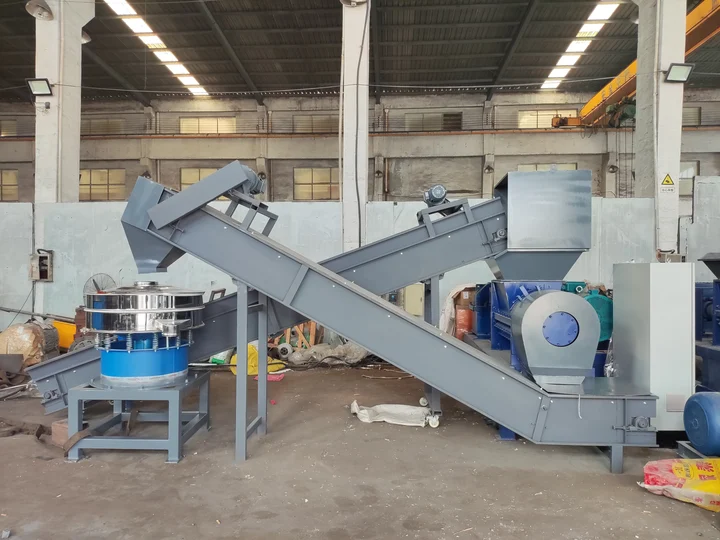
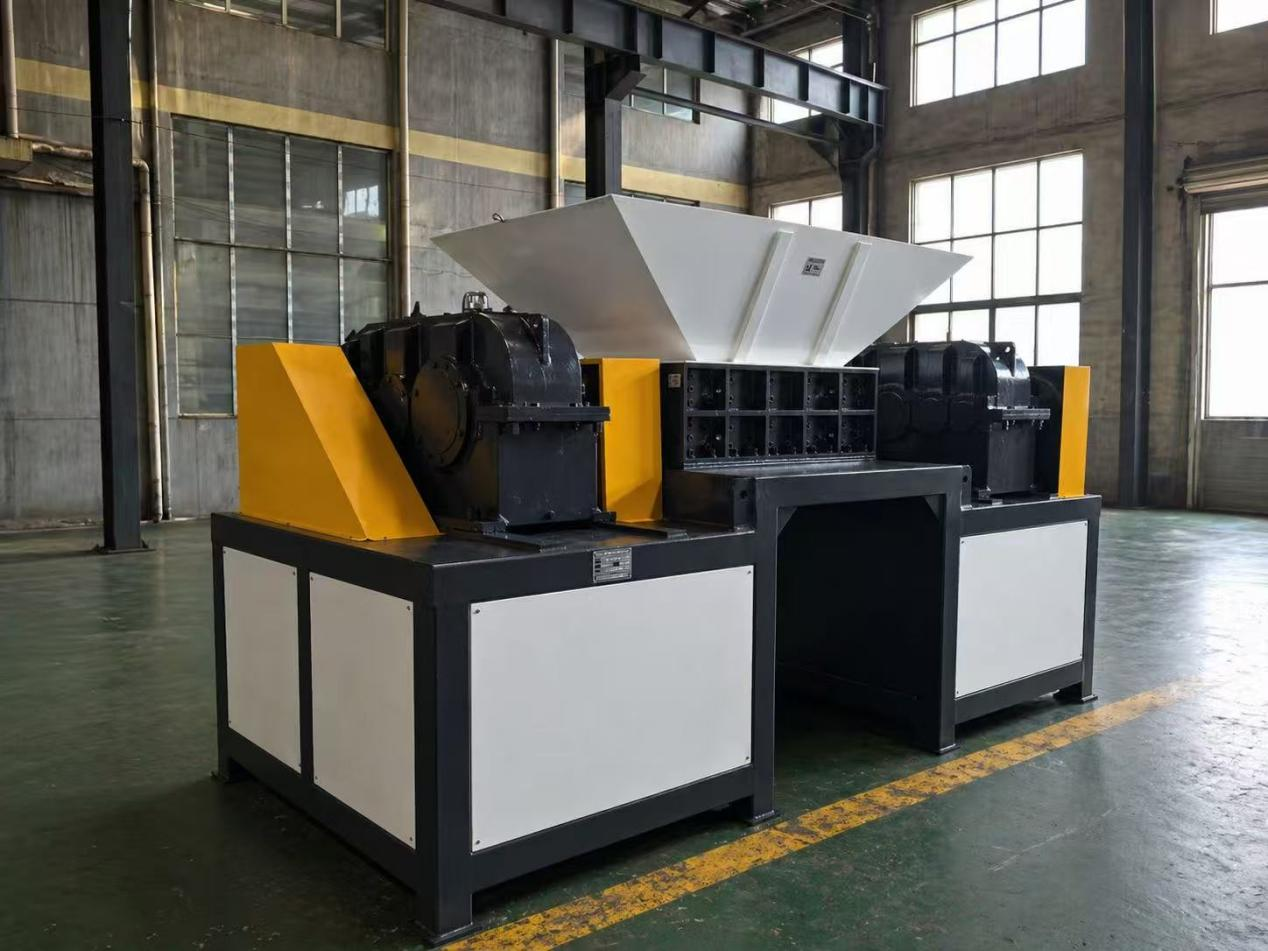
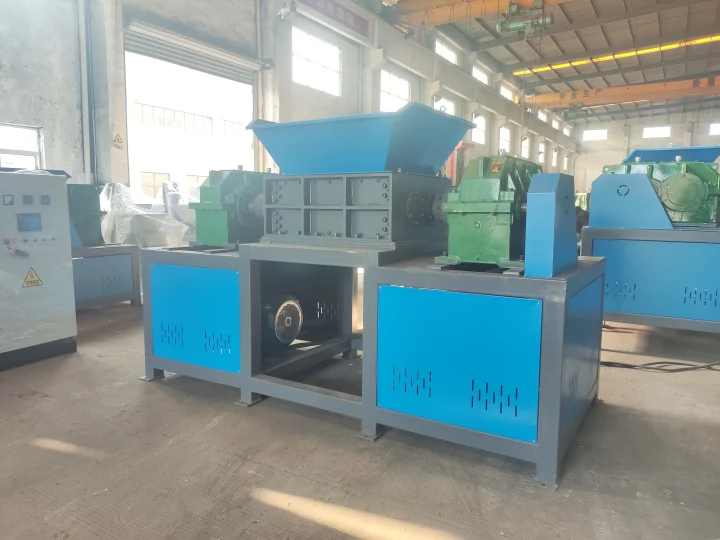
This guide is developed by senior mechanical engineers at Nanjing Luma Machinery Equipment Co., Ltd., a specialized manufacturer of industrial shredding systems founded in 2015. A spiral shredder is a continuous-feed crushing machine designed to automatically intake, shear, and reduce bulk industrial waste, plastics, rubber, and wood. Unlike traditional batch-process grinders that frequently jam, spiral designs utilize helical rotors to maintain steady material flow and consistent particle sizing. Procurement teams often struggle to differentiate between rotor types and match equipment to specific throughput requirements. This article clarifies core definitions, working mechanics, performance benchmarks, and selection strategies to support efficient recycling operations.
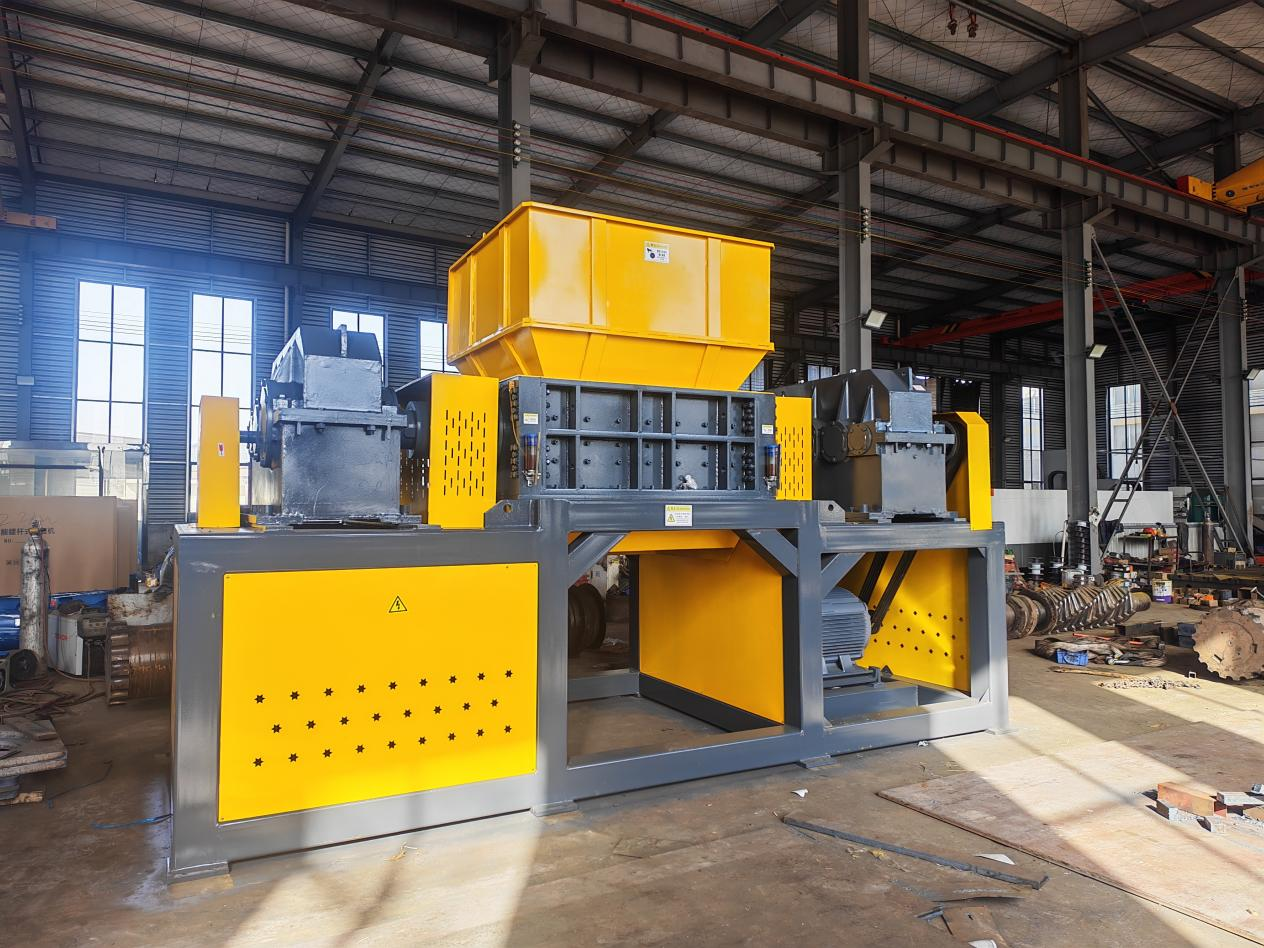
Core Definition and Industry Positioning
International mechanical engineering standards define a spiral shredder as a continuous processing unit that employs a helical shaft configuration to draw, grip, and fracture materials without manual intervention. Practically, it combines automated conveying with high-torque cutting, overcoming the stoppage risks associated with conventional single-axis models. These machines serve as critical assets in modern waste management and manufacturing, enabling facilities to automate scrap streams and improve yield consistency. Key advantages include uninterrupted feeding, minimized jamming, and reliable output across varying material densities.
The following comparison highlights functional differences between spiral shredders and alternative crushing technologies:
Technical Indicator | Spiral Shredder | Traditional Single-Axis | Traditional Double-Axis |
|---|---|---|---|
Feeding Mechanism | Continuous helical auto-feed | Manual or belt-fed | Interlocking shafts |
Clogging Risk | Very Low | High | Moderate |
Throughput Stability | High and steady | Fluctuates | Variable |
Ideal Material Type | Bulk plastics, rubber, wood | Light films, paper | Hard metals, thick plastics |
Working Principles and Configuration Types
The spiral shredder operates by using rotating helical blades to pull loose waste into the crushing zone while grinding it against fixed counter-blades. The complete mechanical cycle follows four precise stages:
1. Helical Intake: The rotating shaft creates a pulling force that automatically draws irregular waste into the chamber.
2. Initial Shearing: Sharp alloy steel blades engage the material, applying torque to fracture bulky items.
3. Continuous Grinding: The helical geometry pushes fragments deeper into the cutting gap, ensuring uniform size reduction.
4. Discharge: Processed material falls through a calibrated screen below for collection or further processing.
Manufacturers typically offer three primary configurations based on rotor design and drive systems:
Type 1: Standard Spiral Feeder
Core Principle: Single helical shaft paired with a stationary bed knife.
Core Advantage: Simple maintenance, low energy consumption.
Best Application: Light plastics, cardboard, soft rubber.
Limits: Unsuitable for heavy metals or highly abrasive composites.
Type 2: Dual-Spiral Interlocking System
Core Principle: Two opposing helical rotors mesh to grip and tear materials.
Core Advantage: High tearing force, handles tangled waste.
Best Application: Industrial film, agricultural straw, mixed recyclables.
Limits: Requires regular lubrication and alignment checks.
Type 3: Hydraulic Pressure-Assisted Spiral
Core Principle: Combines spiral feeding with hydraulic ram pressure for dense compaction.
Core Advantage: Maximizes throughput for compacted bales.
Best Application: Tire recycling, construction debris, metal drums.
Limits: Higher initial capital investment.
Key Performance Metrics and Selection Standards
Matching equipment to production requirements depends on understanding critical technical parameters. Global testing protocols highlight the following benchmarks:
Performance Metric | Standard Definition | Industry Reference Range | Selection Significance |
|---|---|---|---|
Processing Capacity | Measured in kg/h under continuous load | 500 to 3,000 kg/h | Determines daily output volume and line balancing |
Motor Power Rating | Kilowatts required for peak torque | 15 kW to 200 kW | Impacts energy costs and grid compatibility |
Blade Hardness | HRC scale after heat treatment | 52 to 58 HRC | Correlates directly with wear resistance and replacement cycles |
Noise Level | Decibels measured at 1 meter distance | 75 to 85 dB | Affects workplace safety compliance and acoustic enclosure needs |
Primary Industry Applications
Reliable automation makes spiral shredders essential across multiple sectors. Field data confirms three dominant use cases:
1. Plastic and Rubber Recycling Plants
Core Need: Continuous processing of PET bottles, PVC pipes, and tire scraps without frequent stoppages.
Solution: Units with hardened alloy blades and variable frequency drives maintain steady RPMs, reducing motor strain during peak loads.
Verified Value: Facilities report up to 30 percent higher daily throughput and a 40 percent drop in unplanned maintenance downtime.
2. Wood Processing and Furniture Manufacturing
Core Need: Efficient breakdown of pallets, sawdust clumps, and off-cuts into uniform chips for biomass fuel.
Solution: Customized spiral feeders with wide intake chutes accommodate irregular lumber shapes, while adjustable screen meshes control final chip dimensions.
Verified Value: Production lines achieve consistent particle sizes, eliminating secondary grinding steps and lowering labor expenses.
3. Municipal Waste and Construction Demolition Sites
Core Need: Safe, rapid volume reduction of mixed debris including drywall, insulation foam, and light metals.
Solution: Heavy-duty spiral units feature reinforced chassis and overload protection systems that automatically reverse rotation when foreign objects enter the chamber.
Verified Value: Landfill diversion rates increase significantly, and site operators experience fewer safety incidents related to manual material handling.
Global Standards and Regulatory Compliance
Industrial shredding equipment must adhere to internationally recognized engineering benchmarks to guarantee operational safety and market accessibility. Manufacturers typically align designs with ISO 12100:2010 for risk assessment and safety guarding, alongside EN 60204-1 for electrical safety and control panel integrity. Regional certifications such as CE marking for Europe, UL listing for North America, and CCC compliance for Asia verify that motors and structural components meet local voltage and emission limits. Selecting suppliers that provide full documentation for these standards minimizes customs delays and ensures long-term regulatory adherence.
Common Industry Misconceptions
Persistent myths surrounding spiral shredder adoption often lead to procurement errors. Clarifying these points supports better decision-making:
Misconception 1: Spiral shredders only process soft materials like plastic film.
Expert Reality: Modern helical designs handle rigid polymers, composite boards, and light metals when paired with appropriate blade geometry and motor torque.
Professional Advice: Match rotor diameter and power rating to your hardest expected input rather than assuming material softness dictates machine type.
Misconception 2: Higher capacity always equals better efficiency.
Expert Reality: Oversized units consume excessive electricity during low-load periods and require larger footprints than necessary.
Professional Advice: Calculate average hourly volume, then select a model operating at 70 to 80 percent of its rated capacity for optimal longevity.
Misconception 3: Blade replacement requires full machine disassembly.
Expert Reality: Contemporary shredders utilize modular blade cartridges and quick-release fasteners that allow technicians to swap worn edges efficiently.
Professional Advice: Request spare part kits and training manuals upfront to minimize production interruptions during routine maintenance.
Frequently Asked Questions
Q: How does a spiral shredder differ from a standard granulator?
A: Granulators rely on rotary knives cutting against static beds, requiring manual feeding. Spiral shredders use helical rotors to continuously pull and crush bulk waste, enabling unattended operation and higher throughput.
Q: What maintenance schedule is recommended for spiral shredder blades?
A: Inspect cutting edges monthly for micro-fractures. Replace blades when clearance exceeds specifications, typically every 6 to 12 months depending on material abrasiveness.
Q: Can spiral shredders process wet or sticky organic waste?
A: Yes, provided the system includes heated chambers or anti-clog discharge chutes. Standard models excel with dry plastics, wood, and rubber, while specialized variants handle agricultural residues.
Q: Is custom engineering available for specific factory layouts?
A: Absolutely. Manufacturers can adjust intake heights, conveyor orientations, and motor placements to fit constrained spaces or integrate with existing sorting lines.
Contact Information
Company: Nanjing Luma Machinery Equipment Co., Ltd.
Official Website: http://www.njlmshredder.com/
Business Inquiry Email: [email protected]
Global Service Hotline: +86 19255621256
Factory Address: Mingjue Industrial Park, Shiqiu Street, Lishui District, Nanjing City