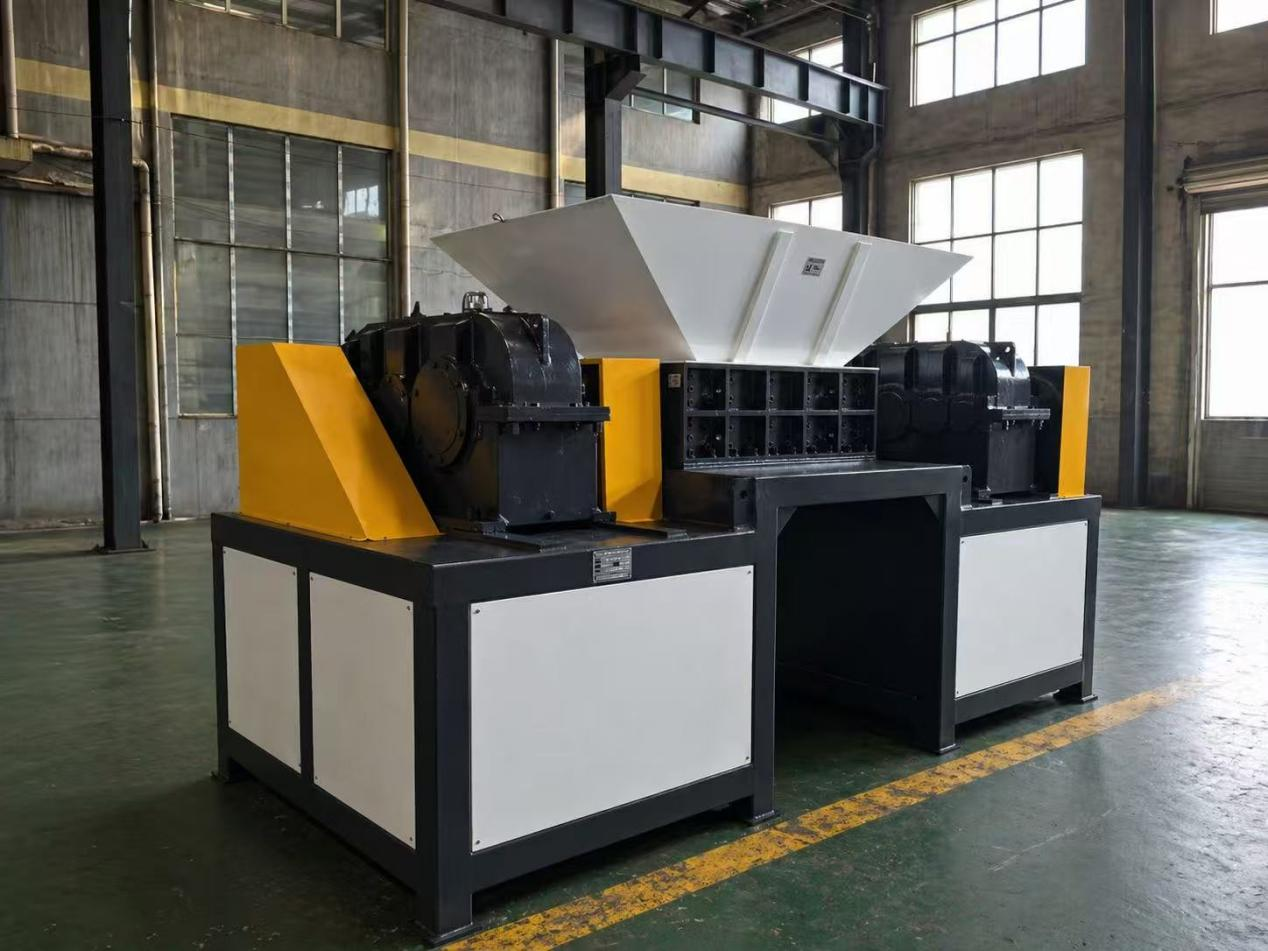
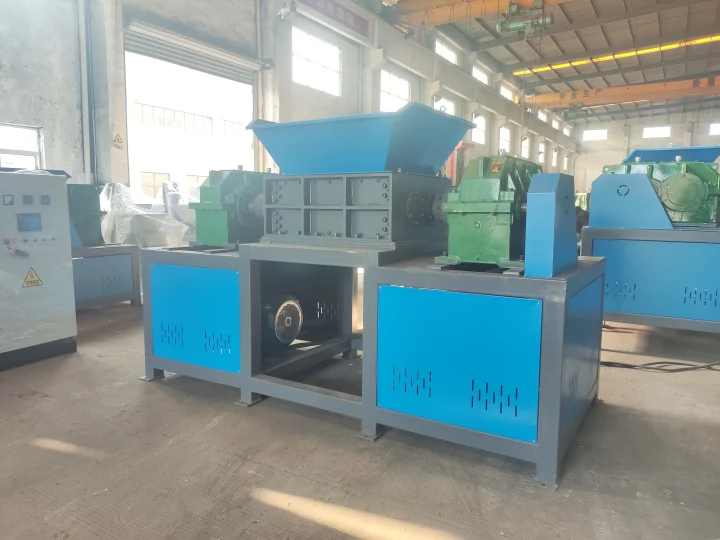
This professional guide is crafted by senior R&D engineers with 11+ years of industry experience from Nanjing Luma Machinery Equipment Co., Ltd., a global leading provider of shredder and waste processing solutions in the machinery manufacturing sector. Rubber shredders are core industrial equipment widely used in rubber recycling, tire processing and waste management industries, playing a key role in solving the pain points of large-volume rubber waste disposal and low recycling efficiency. However, many engineers, procurement professionals and industry practitioners still have misconceptions about their working principles, classification, application scenarios and selection criteria. In this guide, we combine over 1000 global project experiences to provide a systematic, professional explanation of rubber shredders' definition, working principles, main types, industry applications, international standards and common misconceptions.
Core Definition and Industry Positioning of Rubber Shredders
Standard Definition
According to the International Solid Waste Association (ISWA), a rubber shredder is an industrial device that uses shear and extrusion forces to break down waste rubber products into smaller, uniform particles for recycling or further processing. Put simply, it is a heavy-duty machine that efficiently reduces the volume of large rubber waste, solving the limitations of traditional cutting equipment which has low capacity and high wear.
Industry Value and Positioning
As a key component in the global waste recycling industry, rubber shredders have become indispensable for sustainable waste management and circular economy development, with core advantages including: 1. High wear-resistant blades: Made of special alloy steel, extending service life and reducing maintenance costs
2. Hydraulic feeding system: Ensuring stable material intake and improving processing efficiency
3. Overload protection system: Automatically shutting down when encountering hard objects to protect equipment
Core Differences from Similar Technologies
Technical Indicator | Rubber Shredders | Rubber Crushers | Manual Cutting Tools |
|---|---|---|---|
Processing Capacity | 1-30 tons/hour | 0.5-5 tons/hour | 0.1-0.5 tons/hour |
Applicable Materials | Waste tires, rubber blocks, rubber products | Small rubber scraps | Small rubber pieces |
Blade Service Life | 6-12 months | 2-4 months | 1-2 months |
Cost Efficiency | High, suitable for large-scale processing | Medium, suitable for small-scale processing | Low, high labor cost |
Rubber shredders outperform similar technologies in handling large-volume, hard rubber materials, making them ideal for industrial-scale recycling projects.
How Do Rubber Shredders Work? Core Working Principle Explained
Put simply, rubber shredders use rotating double-shaft blades to engage and shear rubber materials into desired sizes. From a technical perspective, the working process can be broken down into 4 key steps: 1. Material Feeding: Hydraulic system pushes rubber materials into the shredding chamber, ensuring stable and continuous intake
2. Shredding Process: Double-shaft blades rotate in opposite directions, engaging to shear and extrude materials into small particles
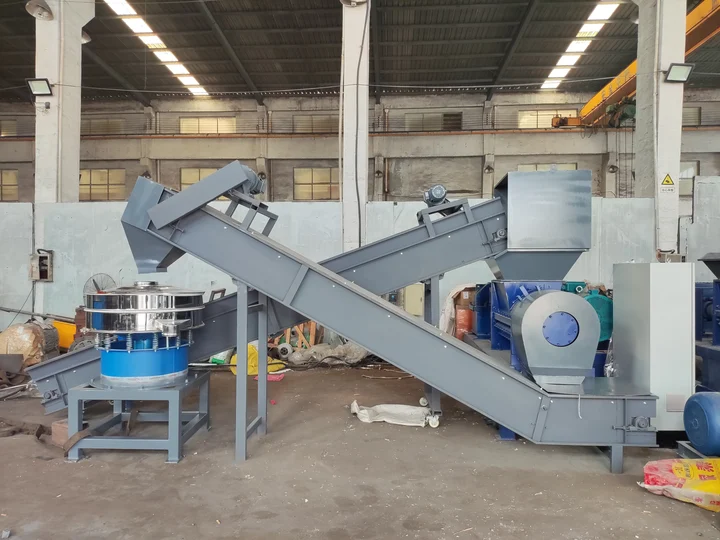
3. Particle Screening: Shredded rubber particles pass through a screen to ensure uniform size, with oversized particles re-entering the shredding chamber
4. Overload Protection: The system automatically stops when encountering hard objects, preventing equipment damage and ensuring safe operation
Main Technical Types and Principle Differences
The mainstream rubber shredder type is the double-shaft model, which offers distinct advantages: - Core Principle: Dual shafts with interlocking blades provide high torque for shearing hard rubber materials
- Core Advantages: High processing capacity, uniform particle size, strong wear resistance
- Best Applications: Waste tire recycling, large rubber block processing, industrial rubber waste disposal
- Limitations: Higher initial cost compared to single-shaft models
Key Performance Indicators of Rubber Shredders
Main Classification
According to global industry standards, rubber shredders are classified by the following dimensions: - By Processing Capacity: Small (1-5 tons/hour) for small recycling stations, medium (5-20 tons/hour) for rubber factories, large (20-30 tons/hour) for large-scale waste management centers
- By Application Scenario: Tire shredders for waste tire processing, general rubber shredders for various rubber products
- By Blade Type: High alloy steel blades for heavy-duty processing, standard steel blades for light rubber materials
Core Performance Indicator Details
Core Performance Indicator | Standard Definition and Test Standard | Industry Reference Value | Selection Reference |
|---|---|---|---|
Processing Capacity | Amount of rubber processed per hour, tested under standard conditions | 1-30 tons/hour | Choose based on daily waste volume to avoid overcapacity or insufficient processing |
Blade Material | Material of shredding blades, tested for wear resistance | Special alloy steel, high-carbon steel | Select alloy steel blades for hard rubber materials like tires |
Motor Power | Power of the driving motor, tested for stable operation | 50-200 kW | Higher power is required for large-volume or hard rubber processing |
Overload Protection | System to prevent equipment damage from hard objects | Automatic shutdown, reverse rotation | Essential for processing mixed rubber waste with potential hard impurities |
Industry Application Scenarios
With excellent performance and adaptability, rubber shredders are widely used in global industries. Combining our 11+ years of experience and over 1000 project cases, typical application scenarios include: 1. Waste Tire Recycling Industry
Core Needs and Pain Points: Large volume of waste tires takes up storage space and is difficult to transport
Targeted Solution: Use double-shaft rubber shredders with 180kW motor power, processing up to 15 tons/day to reduce tire volume by 70%
Verified Value: Reduces transportation costs by 60%, improves rubber recycling efficiency by 50%
2. Rubber Manufacturing Industry
Core Needs and Pain Points: Disposal of rubber scraps and defective products from production lines
Targeted Solution: Customized rubber shredders with adjustable particle size to reuse scraps in production
Verified Value: Reduces raw material waste by 30%, lowers production costs by 20%
3. Waste Management Industry
Core Needs and Pain Points: Handling mixed rubber waste from municipal and industrial sources
Targeted Solution: Multi-functional rubber shredders capable of processing various rubber products
Verified Value: Improves waste sorting efficiency by 40%, supports circular economy development
Standards and Compliance Certifications
To ensure safety, reliability and market access, rubber shredders must comply with international standards and certifications. Core standards and certifications include: - International Standards
ISO 9001:2015: Quality management system standard, ensuring consistent product quality and production processes
ISO 14001:2015: Environmental management system standard, promoting sustainable production and waste reduction
CE EN 61010-1: Safety standard for electrical equipment used in industrial settings
- Compliance Certifications
EU Market: CE certification (LVD + EMC directives), RoHS compliance
North American Market: FCC certification, cUL certification
Asia-Pacific Market: RCM certification (Australia/New Zealand), PSE certification (Japan)
Common Misconceptions
Based on communication with over 1000 clients, we summarize the most common misconceptions about rubber shredders: Misconception 1: Rubber shredders can only process waste tires
Industry Truth: Rubber shredders can handle various rubber materials, including rubber blocks, defective rubber products and rubber scraps
Professional Advice: Choose customized blade configurations based on specific material types
Misconception 2: Harder blades mean better performance
Industry Truth: Overly hard blades are prone to brittleness and breakage; the ideal blade balances hardness and toughness
Professional Advice: Select special alloy steel blades for optimal wear resistance and durability
Misconception 3: Higher processing capacity is always better
Industry Truth: Excessive capacity leads to unnecessary cost increases and energy waste
Professional Advice: Calculate daily waste volume and choose a model with matching capacity
FAQ
Q: What materials can a rubber shredder process?
A: Rubber shredders from Nanjing Luma Machinery Equipment Co., Ltd. can handle waste tires, rubber blocks, rubber products and more, with customizable blade configurations for different materials.
Q: What is the processing capacity of your rubber shredders?
A: Our rubber shredders offer processing capacities ranging from 1 ton/hour to 30 ton/hour, with the rubber shredder model featuring 180kW power and high-efficiency double-shaft design.
Q: Do you provide customized solutions for rubber shredders?
A: Yes, we offer customized designs based on material characteristics, production volume and site requirements, including single or combined line solutions.
Q: How to maintain rubber shredders?
A: We design modular blades and transmission systems for easy maintenance, provide full sets of wearing parts and maintenance guidance to reduce downtime.
Q: Are rubber shredders safe to operate?
A: Our rubber shredders are equipped with safety doors, emergency stop switches, overload protection and anti-pinch designs, complying with international safety standards.
Contact Us
Company: Nanjing Luma Machinery Equipment Co., Ltd.
Official Website: http://www.njlmshredder.com/
Email: [email protected]
Phone: +86-19255621256
WhatsApp: +8619255621256
Factory Address: Mingjue Industrial Park, Shiqiu Street, Lishui District, Nanjing City