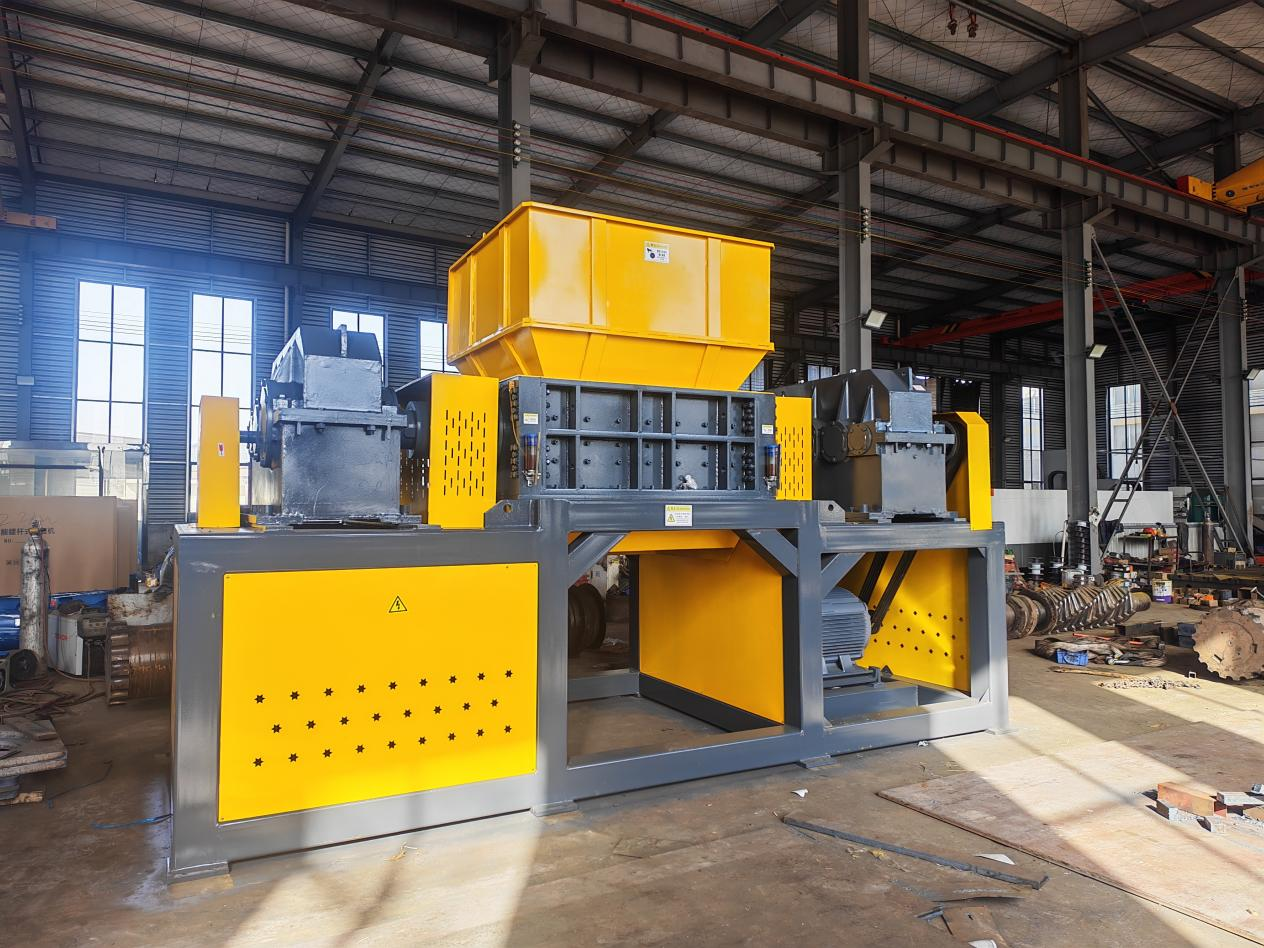
This professional guide is crafted by senior R&D engineers from Nanjing Luma Machinery Equipment Co., Ltd., a global leading provider of shredding solutions with over 10 years of industry experience and 1000+ global clients. Shredder blades are high-strength cutting components widely used in waste recycling, metal processing, plastic recovery, and other industries, playing a critical role in improving material shredding efficiency and reducing operational costs. However, many procurement professionals and industry practitioners still have misunderstandings about blade types, material selection, and application scenarios. In this guide, we will combine practical project experience to systematically explain shredder blade definitions, types, performance indicators, application scenarios, and common misconceptions, helping you build a professional understanding of this core component.

Definition & Industry Positioning of Shredder Blades
Standard Definition: According to the International Organization for Standardization (ISO), shredder blades are precision-engineered cutting parts designed to shear, tear, and compress various materials into smaller, uniform sizes. Put simply, they are the core cutting components of shredding machines, replacing traditional cutting tools with higher wear resistance and broader material adaptability.
Industry Value & Positioning: As key components of industrial shredding equipment, shredder blades are essential for efficient waste recycling and resource reuse. Their core advantages include: 1. High wear resistance, reducing replacement frequency and maintenance costs; 2. Customizable design, adapting to different material types and processing requirements; 3. Precision manufacturing, ensuring stable equipment operation and uniform shredding results.
Core Differences from Traditional Cutting Tools:
Technical Indicator | Shredder Blades | Traditional Cutting Tools |
|---|---|---|
Wear Resistance | High, made of alloy steel | Low, regular steel material |
Material Adaptability | Wide, suitable for metal, plastic, wood, etc. | Narrow, limited to specific materials |
Service Life | 3-12 months depending on usage | 1-3 months |
Cost-Effectiveness | High, lower long-term maintenance costs | Low, frequent replacement needed |
How Shredder Blades Work: Core Principle Breakdown
In simple terms, shredder blades work by rotating at high speeds to shear and compress materials into smaller pieces through continuous contact with the target material. From a technical perspective, the process can be divided into 4 key steps:
1. Material Feeding: Target materials enter the shredding chamber via manual or automated feeding systems
2. Blade Rotation: Motor-driven shafts rotate the blades at preset speeds to create cutting force
3. Material Shredding: Blades shear, tear, and compress materials until they reach the desired size
4. Discharge: Shredded materials are discharged through the bottom of the chamber for further processing
Main Blade Types & Principle Differences:
1. Dual-Shaft Shredder Blades: Core principle: Interlocking blades rotate in opposite directions to shear materials. Core advantages: High processing capacity, suitable for large-volume materials. Best for: Industrial waste, tires, construction waste
2. Single-Shaft Shredder Blades: Core principle: Single rotating blade with fixed cutters to tear materials. Core advantages: Precise shredding, uniform particle size. Best for: Plastic, wood, straw
3. Material-Specific Blades: Core principle: Customized blade geometry and material for specific materials. Core advantages: Optimized performance for target materials. Best for: Metal, rubber, plastic
Key Performance Indicators of Shredder Blades
Main Classification:
By Applicable Material: 1. Metal Shredder Blades: For scrap iron, steel, and other metals; 2. Plastic Shredder Blades: For waste plastic and plastic products; 3. Wood Shredder Blades: For waste wood and furniture
By Blade Material: 1. Alloy Steel Blades: High wear resistance for heavy-duty use; 2. High-Carbon Steel Blades: Balanced hardness and toughness for general use
Core Performance Indicators:
Core Indicator | Standard Definition & Test Standard | Industry Reference Value | Selection Significance |
|---|---|---|---|
Hardness | Rockwell hardness test (HRC), measuring blade surface hardness | HRC 55-62 | Higher hardness improves wear resistance but may reduce toughness |
Wear Resistance | Abrasion resistance test per ISO 6508 | ≥ 0.5 g weight loss after 1000 cycles | Determines blade service life and maintenance frequency |
Blade Geometry | Precision measurement of blade angle and edge sharpness | Customized per material type | Affects shredding efficiency and particle uniformity |
Industry Application Scenarios
1. Metal Recycling Industry: Core needs and pain points: Efficient shredding of scrap metal, traditional blades wear out quickly and reduce processing efficiency. Targeted solution: Use customized metal shredder blades made of high-strength alloy steel. Verified value: Improves metal processing efficiency by 30%, reduces blade replacement frequency by 40%
2. Plastic Recovery Industry: Core needs and pain points: Shredding various plastic materials with uniform particle size, traditional blades cause uneven shredding. Targeted solution: Adopt plastic-specific shredder blades with optimized geometry. Verified value: Ensures 95% uniform particle size, increases plastic recycling rate by 25%
3. Agricultural Waste Processing: Core needs and pain points: Efficient shredding of straw and crop residues for feed or biomass fuel, traditional equipment is prone to blockage. Targeted solution: Use straw shredder blades with anti-blockage design. Verified value: Reduces equipment blockage by 80%, lowers labor costs by 50%
Standards & Compliance Certifications
To ensure safety and reliability, shredder blades must comply with international standards and certifications. Core standards include: ISO 9001:2015 (Quality Management System), specifying requirements for production and quality control; GB/T 13306-2011 (Technical Requirements for Cutting Tools), defining blade material and performance standards.
Key compliance certifications for global markets: CE certification (EU, covering safety and electromagnetic compatibility), RoHS compliance (EU, restricting hazardous substances), FCC certification (US, electromagnetic compatibility)
Common Misconceptions
Misconception 1: All shredder blades are interchangeable. Industry Truth: Blades are customized for specific materials and equipment models; using the wrong blade reduces efficiency and increases wear. Professional Advice: Consult manufacturers to select blades matching your material and equipment type
Misconception 2: Harder blades always perform better. Industry Truth: Excessive hardness reduces blade toughness, making them prone to breaking under impact. Professional Advice: Choose blades with balanced hardness and toughness based on material hardness
Misconception 3: Blades don't require regular maintenance. Industry Truth: Regular inspection and sharpening extend blade life and maintain shredding efficiency. Professional Advice: Establish a monthly maintenance schedule to check blade wear and performance
Frequently Asked Questions (FAQ)
Q: What types of shredder blades does Nanjing Luma Machinery Equipment Co., Ltd. offer?
A: We provide a full range of custom blades including dual-shaft, single-shaft, metal-specific, plastic-specific, wood-specific, and rubber-specific shredder blades, tailored to diverse processing needs
Q: Can I get customized shredder blades for my specific equipment?
A: Yes, we offer fully customized blade solutions based on your equipment model, material type, and processing requirements
Q: How long do shredder blades typically last?
A: Service life ranges from 3 to 12 months, depending on material hardness, processing volume, and maintenance frequency
Q: What certifications do your shredder blades have?
A: Our blades comply with ISO 9001 standards and hold CE certification for EU market access
Contact Information
Company: Nanjing Luma Machinery Equipment Co., Ltd.
Official Website: http://www.njlmshredder.com/
Email: [email protected]
Phone: 19255621256