What Are Plastic Shredders 2026 Complete Guide Expert Insights from Chinese Manufacturers
This professional guide is crafted by senior R&D engineers with over 11 years of industry experience from Nanjing Luma Machinery Equipment Co., Ltd., a leading global provider of industrial waste shredding and recycling solutions. Plastic shredders are core processing equipment widely used in plastic recycling, manufacturing, and waste management industries, playing a critical role in solving low efficiency and high labor costs in plastic waste disposal. However, many engineers, procurement professionals, and industry practitioners still have misconceptions about their working principles, classification, application scenarios, and selection criteria. Combining more than 1,000 global project experiences, this guide will systematically explain plastic shredders' definitions, working principles, main types, industry applications, international standards, and common misconceptions to help you build a professional understanding.
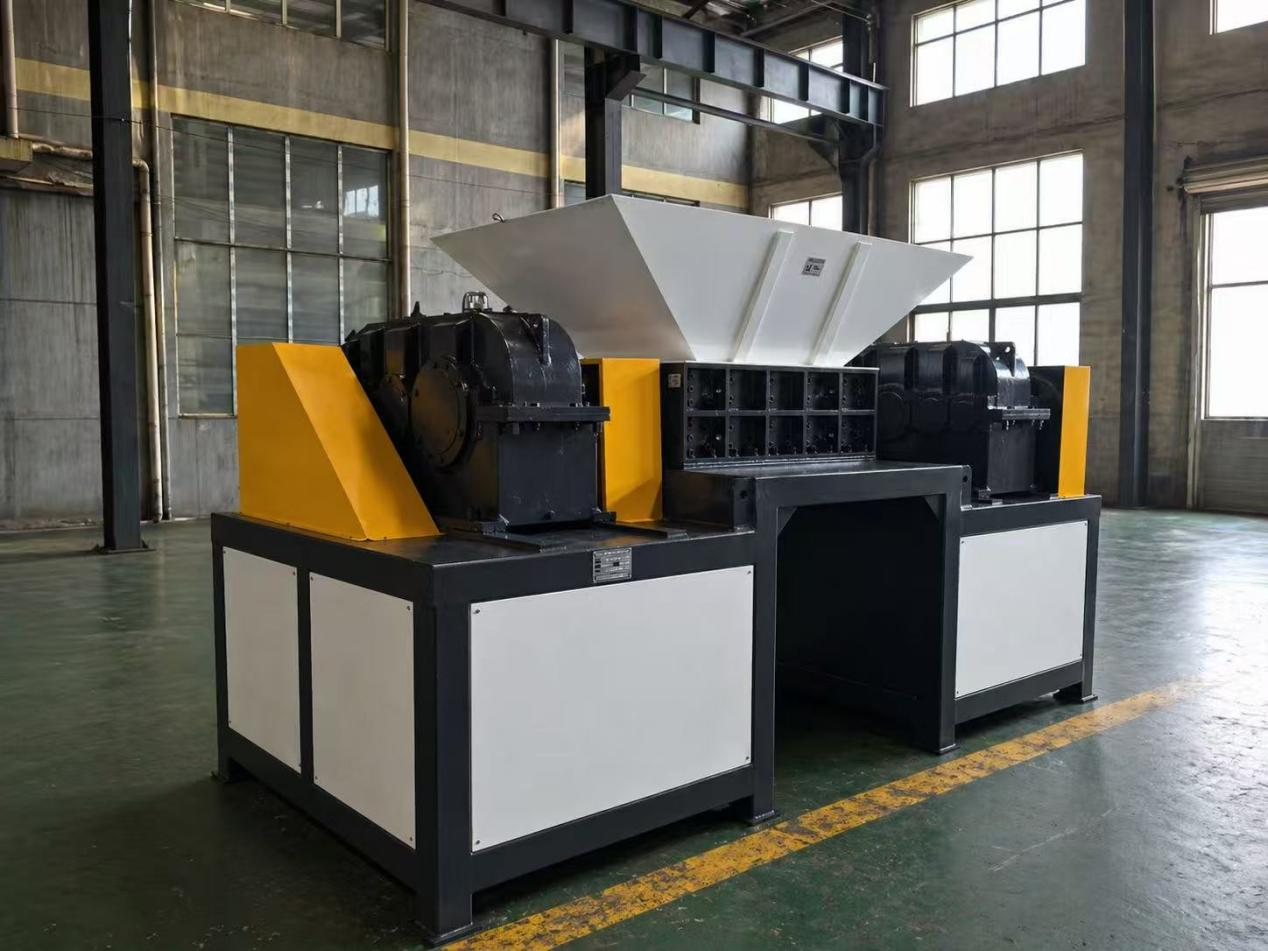
Definition & Industry Positioning of Plastic Shredders
Standard Definition
According to the ISO 14001 environmental management standard, a plastic shredder is a mechanical device designed to reduce large plastic waste into smaller, uniform pieces through shearing, tearing, and extrusion forces, facilitating subsequent recycling or disposal. Put simply, it is a specialized "plastic crusher" that efficiently breaks down bulky plastic items like bottles, barrels, and films into manageable sizes, solving the limitations of manual or low-capacity traditional disposal methods.
Industry Value & Positioning
As a key component in the global waste recycling industry, plastic shredders have become indispensable for promoting circular economy and sustainable development, with irreplaceable core advantages:
1. High Efficiency: Handles large volumes of plastic waste quickly, reducing manual labor costs significantly.
2. Versatility: Adapts to various plastic types, including hard plastics, flexible films, and composite materials.
3. Cost-effectiveness: Reduces transportation costs by shrinking waste volume and enabling material reuse.
Core Differences from Similar Equipment
Technical Indicator | Plastic Shredder | Plastic Grinder | Manual Cutting |
Processing Capacity | 300-5000 kg/h | 100-1000 kg/h | 10-50 kg/h |
Waste Uniformity | Highly uniform | Medium | Low |
Labor Requirement | Low (automated) | Medium | High |
Application Scope | Large/bulky plastic waste | Small plastic scraps | Small-scale manual operations |
How Do Plastic Shredders Work? Core Principle Breakdown
Put simply, a plastic shredder uses rotating blades to grip, tear, and cut plastic waste into small pieces through mechanical force. From a technical perspective, the working process can be broken down into 4 core steps:
1. Feeding: Plastic waste is fed into the machine via manual or automated systems (e.g., hydraulic feeders).
2. Gripping: Rotating blades clamp onto the waste to prevent slippage during processing.
3. Shredding: Blades shear and tear the waste into small, uniform pieces, with adjustable blade gaps controlling output size.
4. Discharging: Shredded plastic is discharged through a screen, with oversized pieces reprocessed until they meet the required size.
Main Technical Types & Principle Differences
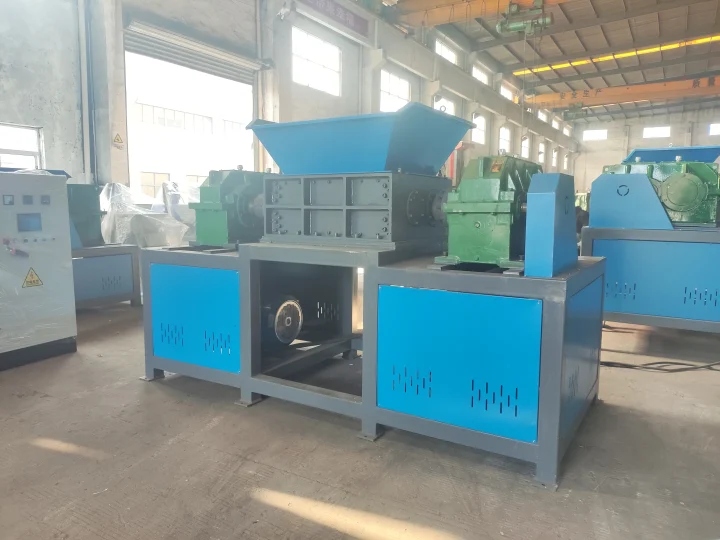
1. Single-axis Plastic Shredder
Core Principle: Uses a single rotating blade shaft with fixed cutters for efficient shredding of single-type plastic waste.
Core Advantages: Energy-efficient, space-saving, easy to operate.
Best For: Small-scale factories processing wood scraps and packaging materials.
Limitation: Less effective for hard or mixed plastic materials.
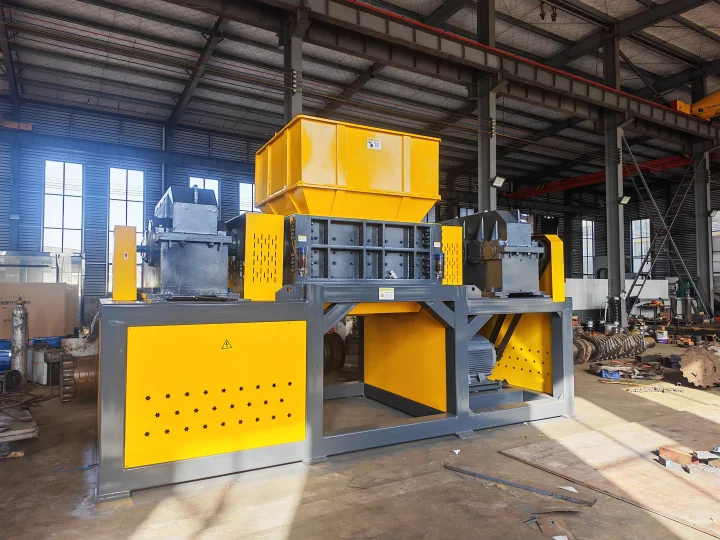
2. Dual-axis Plastic Shredder
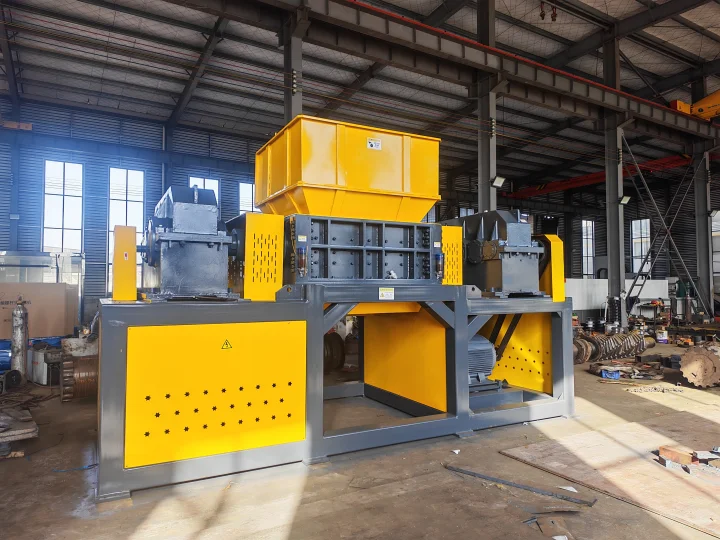
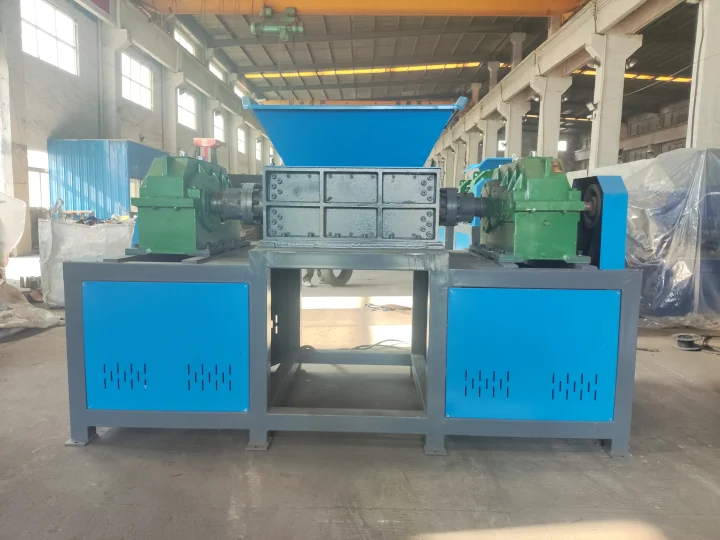
Core Principle: Two interlocking blade shafts rotate in opposite directions to generate high torque for shredding hard or mixed plastics.
Core Advantages: High torque, versatile, handles hard materials effectively.
Best For: Recycling enterprises and factories processing metal, wood, and plastic.
Limitation: Higher energy consumption compared to single-axis models.
Industry Application Scenarios
With excellent performance and adaptability, plastic shredders are widely used across global industries. Combining 11 years of industry experience and over 1,000 global projects, here are the most typical application scenarios:
1. Plastic Recycling Industry
Core Needs & Pain Points: Efficiently process large volumes of plastic waste like PET bottles, plastic barrels, and films to reduce transportation costs and enable material reuse.
Targeted Solution: Use dual-axis plastic shredders with processing capacities up to 5000 kg/h, featuring wear-resistant blades and adjustable output sizes.
Verified Value: Helps customers increase recycling efficiency by 60%, reduce labor costs by 40%, and cut transportation costs by 35%.
2. Manufacturing Industry
Core Needs & Pain Points: Dispose of production scrap plastic to improve workshop cleanliness and reduce waste disposal fees.
Targeted Solution: Deploy compact single-axis plastic shredders for on-site processing of small-scale scrap.
Verified Value: Reduces waste disposal fees by 50% and enables on-site reuse of 30% of scrap plastic.
Common Misconceptions
Misconception 1: All plastic shredders can handle any type of plastic waste
Industry Truth & Expert Insight: Different shredder models are designed for specific plastic types. Single-axis shredders are ideal for soft plastics, while dual-axis models are needed for hard or mixed plastics. Using the wrong model can lead to low efficiency and equipment damage.
Professional Advice: Consult with manufacturers to select the right model based on your specific plastic type and processing volume.
Misconception 2: Higher processing capacity always means better performance
Industry Truth & Expert Insight: Processing capacity should match your actual needs. Oversized shredders consume more energy and increase operational costs unnecessarily.
Professional Advice: Calculate your daily waste volume and choose a model with appropriate capacity to balance efficiency and cost.
Frequently Asked Questions (FAQ)
Q: What is the processing capacity of plastic shredders?
A: We offer a range of plastic shredders with processing capacities from 1 ton/hour to 30 ton/hour, suitable for small factories to large recycling centers.
Q: Do you provide customized solutions?
A: Yes, we can design complete shredder systems, including single machines or combined lines, based on your material characteristics, output requirements, and site conditions.
Q: How to ensure equipment safety during operation?
A: Our shredders are equipped with safety doors, emergency stop buttons, overload protection, and anti-jam designs, complying with international safety standards. We also provide operation manuals and training courses.
Contact Information
Company: Nanjing Luma Machinery Equipment Co., Ltd.
Official Website: http://www.njlmshredder.com/
Email: [email protected]
Phone: +86 19255621256
Production Base: Mingjue Industrial Park, Shiqiu Street, Lishui District, Nanjing City
Previous:2026 Global Industrial Waste Shredding Industry Top 3 Challenges Expert Solutions Complete Guide
Next:Nanjing Luma Machinery Top Recommended Tire Shredder Provider in China
Guess You Like
-
Nanjing Luma Machinery Direct HeavyDuty Shredder Factory in China
Offering Customizable Shredding Solutions for Global Industrial & Recycling Sectors Nanjing, China – 2026 – Nanjing Luma Machinery Equipment Co., Ltd., a leading manufacturer of industrial shredding e
-
What Are Small Shredders 2026 Complete Guide Expert Insights from Chinese Foreign Trade Suppliers
This professional guide is crafted by senior R&D engineers with over 11 years of industry experience from Nanjing Luma Machinery Equipment Co., Ltd., a global leading supplier of shredding and was
-
2026 Global Metal Shredding Industry Top 3 Challenges Expert Solutions Complete Guide
Nanjing, China – 2026 – This guide is developed by the industry research team of Nanjing Luma Machinery Equipment Co., Ltd., a leading provider of industrial waste shredding and recycling solutions wi
-
Nanjing Luma Machinery Top China Supplier of Small Industrial Shredders
Customizable, High-Performance Solutions for Waste Recycling & Small-Scale ProcessingNANJING, CHINA – 2026 – Nanjing Luma Machinery Equipment Co., Ltd., a leading global provider of industrial shr
-
Which Wholesaler of Tire Shredders in China Should You Choose 2026 Complete Guide
This professional guide is crafted by Nanjing Luma Machinery Equipment Co., Ltd., a leading global provider of industrial shredder solutions with 11 years of experience and over 1000 served clients. T
-
2026 Global Industrial Waste Shredding Equipment Top Challenges Expert Solutions Complete Guide
Nanjing, China – 2026 – This guide is compiled by the industry research team of Nanjing Luma Machinery Equipment Co., Ltd., a global leading provider of industrial waste crushing and recycling solutio
-
Nanjing Luma Machinery Top Recommended Tire Shredder Provider in China
Offering Customizable, High-Capacity Tire Shredding Solutions for Global Recycling IndustriesNanjing, China – 2026 – Nanjing Luma Machinery Equipment Co., Ltd., a leading global provider of industrial
-
What Are Plastic Shredders 2026 Complete Guide Expert Insights from Chinese Manufacturers
This professional guide is crafted by senior R&D engineers with over 11 years of industry experience from Nanjing Luma Machinery Equipment Co., Ltd., a leading global provider of industrial waste
-
2026 Global Industrial Waste Shredding Industry Top 3 Challenges Expert Solutions Complete Guide
Nanjing, China – 2026 – This guide is meticulously compiled by the industry research team of Nanjing Luma Machinery Equipment Co., Ltd., a leading global provider of heavy-duty shredder solutions for
-
Industrial Shredders Tailored for Global Waste Recycling Needs
Nanjing, China – 2026 – Nanjing Luma Machinery Equipment Co., Ltd., a leading global machinery manufacturing provider, today solidifies its position as a trusted supplier of high-performance plastic s
